Marc Laidlaw's Cyberpunk Tale Hits Netflix in Love, Death + Robots
- By Nathan
- Feb 08,2026

Long before becoming Valve's lead writer and a key architect of the Half-Life universe, Marc Laidlaw penned his cyberpunk short story "400 Boys" in 1981 at age 21. Originally published in Omni magazine in 1983, the gritty tale later appeared in the influential Mirrorshades: The Cyberpunk Anthology. On his website, Laidlaw wryly notes that "400 Boys" might be his most widely-read work - surpassed only by his Dota 2 promotional copy.
A Visionary's Early Work Reborn
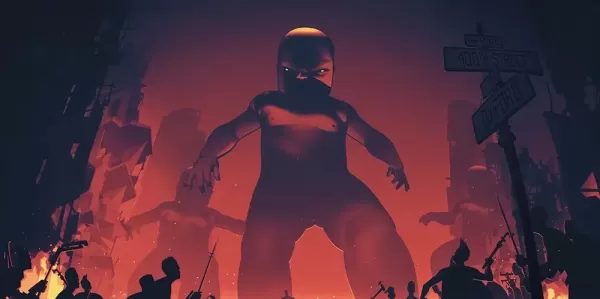
The story follows warring gangs in a post-apocalyptic city governed by bushido-like codes, until the disruptive arrival of the eponymous 400 Boys faction forces unlikely alliances. Now through Netflix's acclaimed Love, Death & Robots anthology, director Robert Valley (known for the Emmy-winning "Ice" episode) brings this early Laidlaw work to stunning animated life, featuring John Boyega's voice talents.
"The inspiration struck me walking through Eugene," Laidlaw recalls. "Seeing all those band flyers on telephone poles made me want to invent fictional group names - which evolved into creating this whole gang-ruled universe."
Despite early interest from Blur Studio's Tim Miller around 2009, the adaptation languished until Love, Death & Robots' 2019 debut changed everything. "When I saw what they'd done with Ballard's 'The Drowned Giant', I knew this was the perfect home for '400 Boys'," Laidlaw says.
From Half-Life to New Creative Horizons
Following his unofficial "retirement" from Valve in 2016, Laidlaw has embraced music composition and selective collaborations. "I may have retired too emphatically," he admits. "The publishing industry transformed while I was in games, but I'm not done creating."
While grateful for Valve's anniversary documentaries helping process his gaming legacy ("It was therapeutic reconnecting with former colleagues"), Laidlaw firmly states he wouldn't return for hypothetical Half-Life projects. "New creators should shape that future - it's their turn now," he reflects.
Surprisingly, post-Valve opportunities haven't matched his expectations. "Most offers were mobile game synopses - not exactly my wheelhouse," Laidlaw laughs, though he remains open to compelling game writing opportunities, name-checking Hideo Kojima's projects as intriguing possibilities.
The Enduring Legacy
As "400 Boys" enjoys this unexpected resurgence four decades later, Laidlaw marvels at his creative journey: "Somehow I've kept stumbling into cultural moments - first cyberpunk's emergence, then Half-Life's success." With characteristic humility, he adds, "Mostly I've just been fortunate to work alongside brilliant people at the right times."
While Half-Life belongs to his past, Laidlaw's story demonstrates how early creative seeds can blossom in surprising ways - whether through Netflix adaptations 40 years later or the continued evolution of the franchises he helped shape. For this veteran storyteller, the next creative chapter remains unwritten.
Latest News
more >-
- Echocalypse Tips to Fortify Your Case
- May 16,2026
-
- Vampire Survivors Expands to Tabletop
- May 14,2026
-

-
-
- Ragnarok X: New Player Guide to Midgard
- May 09,2026