Rod Serling's 'Night Gallery' Axed for Uniqueness
- By Christopher
- Jan 06,2026
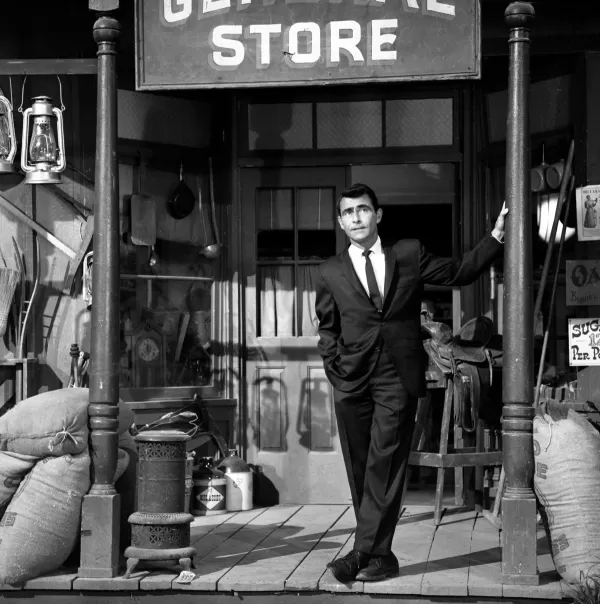
In February 1945, young Rod Serling faced mortality on the battlefields of World War II when a Japanese soldier nearly ended his life in Manila. This defining moment - staring down a rifle barrel and accepting death - would forever shape the future television visionary. As Twilight Zone historian Marc Zicree notes: "He absolutely thought, 'That's it. This is the end of my life.'"
A fellow GI's quick action spared Serling's life, but not his psyche. The war left indelible marks on the writer, scars that would influence his groundbreaking work throughout TV's Golden Age. Though he later achieved fame as television's "angry young man," these battlefield experiences formed the bedrock of Serling's profound moral vision.
The Golden Boy
The premiere episode of The Loner, "An Echo of Bugles," introduced viewers to Civil War veteran Captain William Colton (Lloyd Bridges) - a man adrift in postwar America. Serling's opening narration captured the essence: "In the aftermath of the bloodletting called the Civil War, thousands of rootless, restless, searching men traveled west..."
This westward wandering mirrored Serling's own postwar journey, though his path would ultimately lead to Hollywood rather than the frontier. By the 1950s, the former paratrooper had transformed into television's most celebrated writer, earning six Emmys and the industry's highest fees for searing dramas like Patterns and Requiem for a Heavyweight.
"He was the Arthur Miller of television," Zicree observes.
But censorship battles over controversial topics like racial violence (particularly his shelved Emmett Till-inspired script) convinced Serling that genre storytelling might offer greater creative freedom. "An alien can say what a Democrat or a Republican can't," he famously remarked to his daughter Anne. Thus was born The Twilight Zone - a show that granted Serling unprecedented artistic control to explore the human condition through speculative fiction.
Enter the Loner
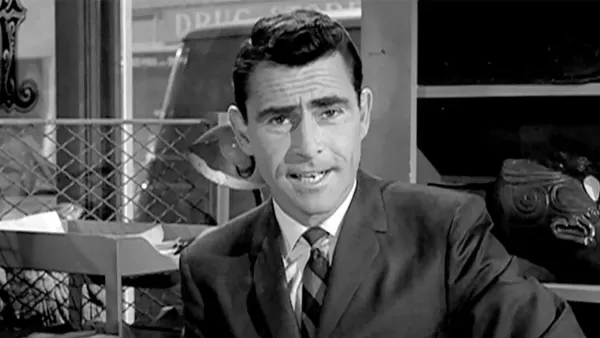
When Captain Colton defends a broken Confederate veteran in The Loner's pilot, the moment perfectly encapsulates Serling's humanist worldview. As daughter Jodi notes: "Above all, he had this profound sense of decency. In every story that he did, there was an attempt to make a comment on the human condition."
The series allowed Serling to continue exploring the themes that animated his Twilight Zone work - racism, justice, postwar trauma - now set against the backdrop of the American West. In a powerful early episode, Colton is haunted by having killed a teenage soldier on the war's final day - precisely the kind of morally complex storytelling that set Serling apart.
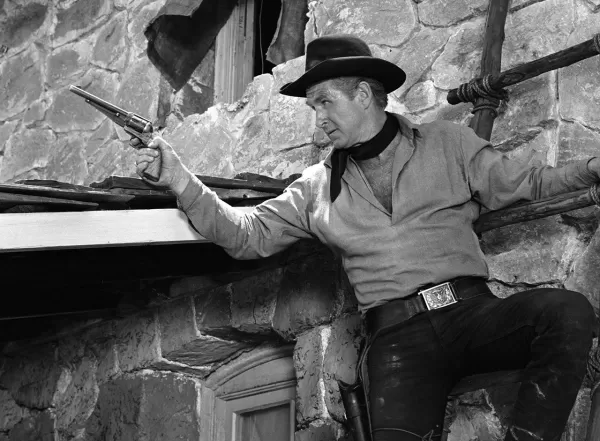
Yet network executives expected conventional Western action, not philosophical explorations of war's aftermath. As Zicree explains: "By [this point], the networks wanted shows that would defend nobody." When CBS canceled The Loner after just one season, citing insufficient violence, it marked the end of Serling's golden era in television.
The War That Never Ends
The psychological wounds of combat never fully healed for Serling. His daughter Anne recalls childhood mornings finding her father distraught from nightmares: "He told me that he had dreamt that the enemy was coming at him." These battlefield demons frequently surfaced in his writing, particularly in Twilight Zone episodes like "The Purple Testament," featuring a soldier who foresees his comrades' deaths.
In The Loner, Serling channeled these experiences through powerful scripts exploring racial violence ("The Homecoming of Lemuel Stove") and postwar trauma ("One of the Wounded"). The latter episode features one of Serling's most poignant exchanges:
Phelps: "I sometimes think a man can die from killing, as well as from being killed."
Colton: "Which is one of the things that distinguishes him from an animal."
Though The Loner lasted just 26 episodes, it represents an essential chapter in Serling's career - the work of a moral visionary never fully at peace with the world's injustice. As Zicree remarks about the show's best moments: "You know that the guy who wrote that lives that."
Latest News
more >-

- Echocalypse Tips to Fortify Your Case
- May 16,2026
-
- Vampire Survivors Expands to Tabletop
- May 14,2026
-

-

-

- Ragnarok X: New Player Guide to Midgard
- May 09,2026